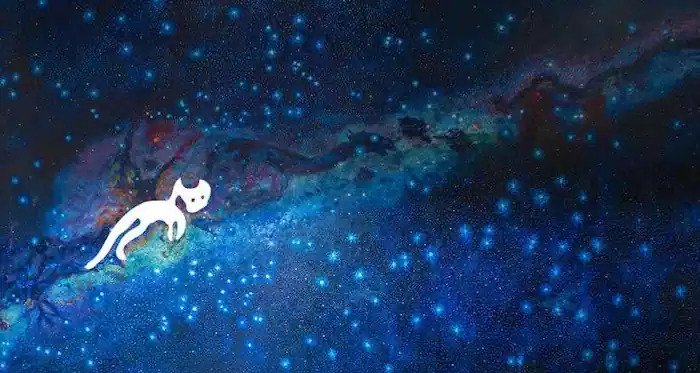
During the time of the Incas, though it might sound unreal. Astrology was strongly believed in and thought to influence agriculture, livestock, and life itself. In the Andean region, the Andean Milky Way was believed to be a river, referred to as Mayu. This was the primary source of all life on earth, namely water. Thus, for the Incas, through this Andean Milky Way, the sky and the earth were believed to be connected. The Mayu river is a reflection of the Qhapaq Ñan, it is alive among us and is part of a whole.
When talking about this Andean Milky Way, we’re not only talking about the Incas, but many cultures see figures in star clusters (constellations), marveling at astrology. Specifically, the Inca culture often saw their constellations in this Andean Milky Way in the dark spaces between the stars, known as yana phuyu (dark clouds). Through these dark clouds, the Incas could see animals and elements related to daily life.
Incan Knowledge
Incan culture was deeply rooted in the knowledge of celestial bodies and astrology. They even developed a lunar and solar calendar closely related to religion and agriculture. Just as in Europe, stars were named and imaginary lines were drawn to recognize figures, giving a divine origin to the stars and their alignment. Thus the Andeans had their own conception regarding the stars in the sky.
The Incas appreciated a great river in their conception, which they called Mayu (river in their language) to designate the Milky Way, the Southern Cross, or the Chakana known in ancient Peru.
Constellations Andean Milky Way
The Incas, with their Andean Milky Way, considered knowledge of constellations and stars very important. Because of this, they could even organize the beginning and end of planting and harvesting periods. Perfectly knowing the start of solstices and equinoxes. Thus, in their main cities, astronomical observatories were found where, through rituals, astrological observations were conducted. In these constellations, similarities were found with shapes such as the fox, the llama, the snake, the toad, and the partridge.
Yana Llama (Black Llama)
The darkest and largest constellation that exists is the Yana Llama or Black Llama, and it can be visualized in November. This constellation in the Andean Milky Way is very easy to recognize because its eyes are two bright stars and it is formed by two bodies: a mother and her offspring.
Atoq (Fox)
The Atoq or fox, part of the Andean Milky Way, is located below the Yana Llama, simulating chasing them. This is one of the most outstanding as its eyes are of intense red color. This constellation should be precisely seen in December, as the sun passes through that place and it is also the time when the fox’s cubs are born.
Lluthu (Partridge)
This is a dark constellation that can be seen from early morning from October, lasting until July, coinciding with the end of the harvest of different tubers in the Cusco region.
Hanp’atu (Toad)
The toad was one of the most important animals in the Inca empire. During the Inca era, it was believed that if the toad croaked a lot, it meant that it was going to rain. So, when it appeared in the Andean Milky Way, it was a sign that the Incas should start planting because it was going to start raining.
According to Andean culture, the toad was very beloved on earth because, as believed, it was related to water and life. This constellation can be seen in the early morning, at the end of October when the croaking of toads announces the rainy season.
Micheq (Shepherd)
The Micheq or shepherd, within the Andean Milky Way, is believed to have been a woman. In the Andes of Peru, it is women who own herds, while men take care of them. This constellation within the Andean Milky Way is shown stretching her arms towards the Yana llama with the intention of protecting them and driving away the fox.
Mach’acuay (Snake)
This constellation can be seen between the months of August. For Incan astronomy, snakes were very valuable animals because they represented the underworld or ukhu pacha. Likewise, the Incas believed that snakes were closely related to water and the agricultural cycle.
You might be interested in reading this: Acclimatizing before our trip – Rainbow Mountain tips
First myth of the universe’s creation
The Incas, regarding the creation of the universe, express that a long time ago. On a very distant day, a God without a name decided to create a world. During this time, there was earth, water, and fire available. Thanks to these elements, a universe composed of three planes was created, in which the other gods were also placed.
In the upper plane, the Sun, the Moon, the stars, and the comets were placed. In a slightly lower plane, the lightning, the thunder, the rainbow, and all the things that only have a divine explanation. This upper plane was called Hanan Pacha.
In the second plane, called Kay Pacha, there are humans, animals, and plants, all living beings, including spirits. In the third plane, the lower world, Ucu Pacha, the space reserved for the dead remained.
These three planes of life were interconnected by very special routes that gave access to each other. The son of the Sun, the Inca or prince, the “Inti churín,” could access from above. From the inside, one could pass to the one here, through the natural ducts that opened towards the outside, from which the waters of the earth, caves, cracks, and volcanoes emerged.
The cycle closed with the upward flow that originated from the Ucu Pacha through a pacarina. So that men could penetrate it and, in this world, gave birth to the Inca Empire. Humanity, with its founders Manco Capac and Mama Ocllo at the head, could go to the upper world to communicate with the gods.
You might be interested in reading this: 5 quality standards to guarantee a good tourist service

Incan Gods: The Andean Milky Way
According to the belief of the Incas, the world as we know it now was created by Inti. In this legend, the god Inti emerged from Lake Titicaca and became the father of humanity. Thanks to the light and heat they give us life and energy.
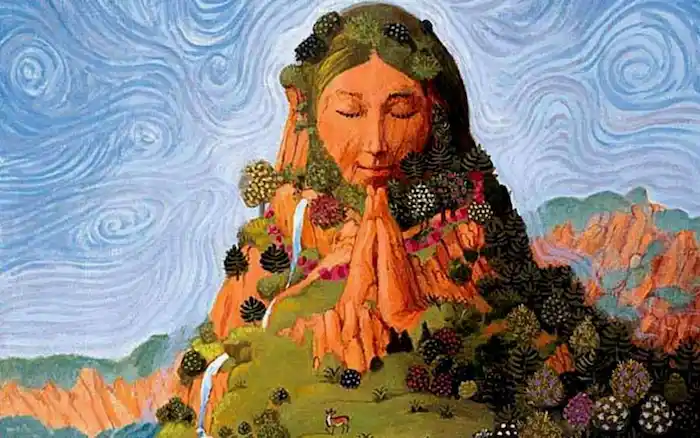
Pachamama, Mother Earth
Pachamama is our mother earth, thanks to whom we have life and can give life. She was a goddess who provided everything necessary for the survival and prosperity of human beings. She was considered the source of fertility and abundance.
The First Human Beings
According to Incan beliefs, the first human beings emerged from rocks. The God Wiracocha gave life to the stones and transformed them into men and women. The first settlers were sent to the surface of the earth to populate it.
You might be interested in reading this: 5 Best hotels in Lima